Medical Services
The Largest online database of patient reviews for doctors, facilities and online Appointment.


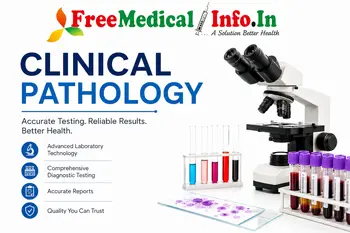
Clinical pathology is
an important part of laboratory medicine that is concerned with the
study of blood, urine, other body fluids, and other biological samples
for the diagnosis, monitoring and prevention of diseases. It plays an important
role in modern healthcare by providing precise laboratory data that enable
clinicians to make informed clinical decisions. Almost every area of medicine
relies on clinical pathology for accurate laboratory testing, from routine
health screenings to the diagnosis of complicated medical disorders.
Clinical pathology
laboratories conduct several diagnostic tests, such as
complete blood counts, blood chemistry analysis, coagulation studies,
microbiology cultures, immunology testing, molecular diagnostics, and urine
analysis. These tests assist in detecting infections, problems with the blood,
problems with metabolism, problems with the kidneys and liver, problems
with hormones, autoimmune illnesses, and many types of cancer. The
results must be read in conjunction with the patient’s medical history and
clinical findings to ensure accurate diagnosis and effective treatment
planning.
Haematology is one of the
most significant branches of clinical pathology, concerned with the evaluation
of blood cells and the functioning of bone marrow. Tests such as a complete
blood count (CBC), peripheral blood smear, reticulocyte count and
coagulation profiles help diagnose anaemia, leukaemia, clotting disorders,
infections and platelet problems. Clinical chemistry assesses organ function by
identifying glucose, electrolytes, enzymes, proteins, and other biochemical
indicators. Microbiology identifies the bacteria, viruses, fungi and
parasites responsible for infectious disorders and allows clinicians to
administer tailored antibiotic medication.
Laboratory technology has
advanced, and clinical pathology testing is faster and more accurate. Automated
analysers, digital microscopy, molecular diagnostics, polymerase chain
reaction (PCR), flow cytometry and genetic testing offer early disease
detection and accurate tracking of therapy response. These developments also
assist clinicians in selecting medications based on specific biological traits,
adding to the field of individualised medicine.
Quality assurance is
critical in clinical pathology. Laboratories adhere to rigorous
international standards for specimen collection, processing, calibration,
quality control and reporting. Skilled pathologists, laboratory scientists
and technicians collaborate to provide reliable, reproducible test results.
Correct laboratory reporting eliminates diagnostic mistakes and enhances
patient safety.
Clinical pathology is
also important in the prevention of disease. Routine lab screening can discover
diseases before symptoms develop, allowing for early treatment and improved
long-term results. Blood tests are also regularly used to evaluate chronic
illnesses like diabetes, thyroid problems, renal disease, cardiovascular
disease, and liver disorders. Preventive testing is especially beneficial
for people with risk factors, family history or medical treatment.
Clinical pathology continues
to be an important part of patient care in the current health care setting. Clinical
pathology is the source of accurate diagnostic information that enables the
detection of disease, monitoring of therapy, preventive medicine, and better
clinical outcomes by integrating scientific understanding, advanced laboratory
technology, and high-quality standards. It continues to improve the quality of
healthcare and ensure that patients receive prompt, evidence-based medical
management.
Anaemia Disorders Iron Deficiency Anaemia Vitamin B12 Deficiency Anaemia Folate Deficiency Anaemia Aplastic Anaemia Haemolytic Anaemia Autoimmune Haemolytic Anaemia Sickle Cell Anaemia Thalassaemia Anaemia of Chronic Disease Megaloblastic Anaemia White Blood Cell Disorders Leukocytosis Leukopenia Neutropenia Neutrophilia Lymphocytosis Lymphopenia Eosinophilia Basophilia Monocytosis Monocytopenia Platelet Disorders Thrombocytopenia Immune Thrombocytopenia Thrombocytosis Essential Thrombocythaemia Platelet Dysfunction Disorders Bernard-Soulier Syndrome Glanzmann Thrombasthenia Bleeding & Clotting Disorders Haemophilia A Haemophilia B Von Willebrand Disease Deep Vein Thrombosis (DVT) Pulmonary Embolism Factor V Leiden Mutation Protein C Deficiency Protein S Deficiency Antiphospholipid Syndrome Bone Marrow Disorders Myelodysplastic Syndrome (MDS) Myelofibrosis Pure Red Cell Aplasia Bone Marrow Failure Syndromes Fanconi Anaemia Blood Cancer Disorders Acute Myeloid Leukaemia (AML) Acute Lymphoblastic Leukaemia (ALL) Chronic Myeloid Leukaemia (CML) Chronic Lymphocytic Leukaemia (CLL) Hodgkin Lymphoma Non-Hodgkin lymphoma (NHL) Multiple Myeloma Waldenström Macroglobulinaemia Plasma Cell Disorders Monoclonal Gammopathy of Undetermined Significance (MGUS) Multiple Myeloma Solitary Plasmacytoma AL Amyloidosis Light Chain Disease Genetic Blood Disorders Sickle Cell Disease Alpha Thalassaemia Beta Thalassaemia G6PD Deficiency Hereditary Spherocytosis Pyruvate Kinase Deficiency Hereditary Elliptocytosis Iron & Nutritional Disorders Iron Deficiency Iron Overload (Haemochromatosis) Vitamin B12 Deficiency Folate Deficiency Copper Deficiency Anaemia of Nutritional Deficiency Transfusion Medicine Disorders Acute Haemolytic Transfusion Reaction Delayed Haemolytic Transfusion Reaction Febrile Non-Haemolytic Reaction Allergic Transfusion Reaction TRALI TACO Blood Group Incompatibility Massive Transfusion Complications Iron Overload After Repeated Transfusions Paediatric Haematology Disorders Neonatal Anaemia Haemolytic Disease of the Newborn Childhood Immune Thrombocytopenia (ITP) Congenital Neutropenia Diamond-Blackfan Anaemia Inherited Bone Marrow Failure Syndromes Rare Haematological Disorders Paroxysmal Nocturnal Haemoglobinuria (PNH) Thrombotic Thrombocytopenic Purpura (TTP) Haemolytic Uraemic Syndrome (HUS) Evans Syndrome Cold Agglutinin Disease Castleman Disease Langerhans Cell Histiocytosis Autoimmune Blood Disorders Autoimmune Haemolytic Anaemia Immune Thrombocytopenia Antiphospholipid Syndrome Infectious Disease Markers Sepsis Infectious Mononucleosis Malaria Dengue Fever HIV Infections Viral Hepatitis Tuberculosis Cytomegalovirus Infection Inflammatory & Autoimmune Disorders Rheumatoid Arthritis Systemic Lupus Erythematosus (SLE) Vasculitis Adult-onset Still's Disease Sarcoidosis Endocrine & Metabolic Disorders Diabetes Mellitus Diabetic Ketoacidosis Hypothyroidism Hyperthyroidism Adrenal Insufficiency Hyperparathyroidism Acute Hepatitis Chronic Liver Disease Liver Cirrhosis Alcoholic Liver Disease Non-Alcoholic Fatty Liver Disease (NAFLD) Kidney Function Disorders Acute Kidney Injury Chronic Kidney Disease Nephrotic Syndrome Glomerulonephritis Diabetic Nephropathy Renal Tubular Disorders Electrolyte & Acid–Base Disorders Hypernatraemia Hypokalaemia Hyperkalaemia Metabolic Acidosis Metabolic Alkalosis Respiratory Acidosis Respiratory Alkalosis Clinical Microbiology Related Conditions Bacterial Infections Viral Infections Fungal Infections Parasitic Infections Urinary Tract Infection Bloodstream Infection (Bacteraemia) Meningitis Pneumonia
Book appointments with minimum wait-time & verified doctor details

Clinical Pathology

Clinical Pathology

Clinical Pathology

Clinical Pathology

Clinical Pathology

Clinical Pathology

Clinical Pathology

Clinical Pathology
Book appointments with minimum wait-time & verified Hospital details

SSB Heart And Multispeciality Hospital
Clinical Pathology

Clinical Pathology

Clinical Pathology

Clinical Pathology

Clinical Pathology
Book appointments with minimum wait-time & verified other services

Clinical Pathology

Get 25 Percent Discount of Pathology With Dr. Bharti Sharma Using Freemedicalinfo.in
Offered By :Dr Bharti Sharma
Get 20 Percent off on Consultation With Dr. Anil Soni Using Freemedicalinfo.in
Offered By :Dr Anil Soni Faridabad 1686567472.webp) Offered By :Accutrust Diagnostic ( Sector 86 ) Faridabad
Offered By :Accutrust Diagnostic ( Sector 86 ) Faridabad
1686560553.webp)
Get 10 Percent Discount On All Blood Test With SRL-Diagnostic(Sector 3) Using Freemedicalinfo.
Offered By : SRL Diagnostic ( Sector 3 ) Offered By :Bharat Path Lab Collection Center

Get UPTO 60 Percent Discount On Blood Test With Dr. Khanna Pathcare Using Freemedicalinfo.in
Offered By :Dr Khanna Pathcare Offered By :Pathkind Lab ( Sector 88 Faridabad

Top Clinical Pathology Doctors in Faridabad
"The Importance of Clinical Pathology in Diagnosis and Treatment of Disease" Clinical pathology, also known as laboratory medicine, is th...
Advertisement

|

|

|

|

|

|

|

|

|
|