Medical Services
The Largest online database of patient reviews for doctors, facilities and online Appointment.


With the development of Molecular Oncology and Cancer Genetics, which provide patients a more exact and focused method of diagnosis and therapy, the field of cancer care has changed dramatically. Finding the fundamental genetic and molecular origins of different malignancies depends on a molecular oncologist and cancer geneticist, who also helps create tailored treatment strategies that enhance results and lower unneeded side effects.
Molecular oncology is the study of the genetic abnormalities, aberrant cellular pathways, and molecular changes promoting cancer propagation and development. A Molecular Oncologist detects certain genetic changes in a patient's tumour using cutting-edge laboratory approaches, including next-generation sequencing (NGS), genetic profiling, and biomarker testing. This data then guides the selection of targeted medicines, immunotherapies, and individualised treatment decisions.
Comparably, cancer geneticists focus on spotting inherited genetic mutations raising a person's cancer risk. This testing enables the identification of mutations in genes such as BRCA1, BRCA2, TP53, and others, which significantly increase the risk of breast, ovarian, colon, and other cancers.
Early identification, risk assessment, and exact cancer care made possible by the combined knowledge of a Molecular Oncologist and Cancer Geneticist Working collaboratively with surgeons, oncologists, and genetic counsellors, they offer a comprehensive cancer treatment approach. Understanding a patient's individual genetic makeup helps them to choose the best treatments and avoid medicines unlikely to be helpful, therefore lowering side effects and raising survival rates.
Molecular and genetic tests help patients diagnosed with cancers like breast, ovarian, lung, colorectal, prostate, and some blood cancers immensely. This method is also essential for spotting people who might profit from innovative treatments presented in clinical studies.
Apart from treatment planning, cancer geneticists are extremely important in preventative medicine. For those with high-risk genetic abnormalities, preemptive approaches, including risk-reducing procedures, increased screening, or preventative drugs, can dramatically reduce the probability of cancer development.
Modern cancer treatment benefits much from the work of molecular oncologists and cancer geneticists. Their work signifies a shift from conventional, universal therapy approaches to customised, precise medicine. Combining science, technology, and compassionate care helps patients have information and access to the most sophisticated cancer treatments currently available.
See a skilled molecular oncologist and cancer geneticist if you or a family member are diagnosed with cancer or have a strong family history of the disease to help save their lives.
Hereditary Cancer Syndromes BRCA1/2 Mutations – Breast, Ovarian, Pancreatic, Prostate Cancer Lynch Syndrome (HNPCC) Colorectal Endometrial Ovarian Cancer Li-Fraumeni Syndrome Breast Cancer Brain Tumors Sarcomas Leukemia FAP (Familial Adenomatous Polyposis)- Colorectal Cancer Peutz-Jeghers Syndrome - GI, Pancreatic, Breast, Ovarian Cancer MEN1 & MEN2 (Multiple Endocrine Neoplasia) - Parathyroid, Pituitary, Thyroid, Adrenal Tumors Molecularly Defined Cancers (Somatic Mutations) EGFR-Mutated Lung Cancer ALK-rearranged NSCLC (Non-Small Cell Lung Cancer) BRAF-mutated Melanoma Colon Cancer HER2-positive Breast & Gastric Cancer IDH1/2-mutant Gliomas & AML (Acute Myeloid Leukemia) KRAS/NRAS/BRAF-mutated Colorectal Cancer MSI-High/dMMR Tumors (e.g., Colon, Endometrial, Stomach Cancer) Pediatric Genetic Tumors Retinoblastoma and RB1 Mutation Neuroblastoma ? ALK Mutation Medulloblastoma ? SHH or WNT Pathway Mutations Wilms Tumor ? WT1, WTX genes Rhabdoid Tumors ? SMARCB1 Loss Rare Inherited Tumor Syndromes Neurofibromatosis (NF1/NF2) ? Nerve sheath tumors Von Hippel-Lindau (VHL) Disease ? Renal Cell Carcinoma (RCC) Hemangioblastoma Pheochromocytoma Tuberous Sclerosis Complex (TSC) Hereditary PGL/PCC Syndromes (SDHB, SDHD mutations) ? Paraganglioma Precision Oncology Cancers Treated based on genomic profiling or sequencing. NTRK Fusion-Positive Tumors ? Multiple Rare Cancers RET-altered Thyroid & Lung Cancers ROS1-rearranged NSCLC TMB-High (Tumor Mutational Burden) tumors ? Candidates for Immunotherapy
Book appointments with minimum wait-time & verified doctor details

Molecular Oncologist & Cancer Geneticist
Book appointments with minimum wait-time & verified Hospital details
Book appointments with minimum wait-time & verified other services
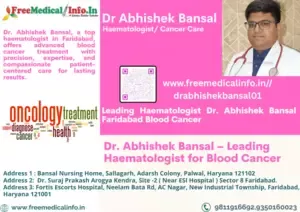
Leading Haematologist for Blood Cancer Treatment in Faridabad – Dr. Abhishek Bansal
Dr. Abhishek Bansal – Leading Haematologist for Blood Cancer Blood cancer requires timely diagnosis, advanced treatment, and compassionate care. In...
Advertisement
|

|

|

|

|

|

|

|
|

|