Medical Services
The Largest online database of patient reviews for doctors, facilities and online Appointment.


High Blood Pressure: Symptoms, Causes, Treatment and Prevention
High blood pressure, also known as hypertension, is one of the most common cardiovascular conditions. It often develops silently without noticeable symptoms, but if left uncontrolled, it can increase the risk of heart attack, stroke, heart failure and kidney disease.
The good news is that high blood pressure can often be managed effectively with regular monitoring, healthy lifestyle changes and medication when required.
Understanding your blood pressure readings, identifying risk factors and following appropriate medical advice can help protect your long-term heart health.
Blood pressure is the force exerted by circulating blood against the walls of the arteries. It is recorded using two numbers.
Systolic blood pressure: The upper number, measured when the heart contracts.
Diastolic blood pressure: The lower number, measured when the heart relaxes between beats.
A reading of 120/80 mmHg is commonly used as a reference point for normal blood pressure in adults. However, the interpretation of a reading depends on the guideline being followed, the measurement setting and the patient's overall health.
Hypertension is diagnosed based on appropriately measured blood pressure readings over time, rather than a single elevated reading in most routine situations.
Persistently elevated blood pressure places additional strain on the heart and blood vessels. Over time, it can damage blood vessels and important organs.
Uncontrolled hypertension increases the risk of:
Coronary artery disease and heart attack
Stroke
Heart failure
Chronic kidney disease
Damage to the blood vessels of the eyes
Certain vascular complications
Early diagnosis and appropriate treatment can significantly reduce these risks.
High blood pressure usually does not cause obvious symptoms. Many people feel completely normal despite having significantly elevated readings.
Occasionally, people may experience headache, dizziness or blurred vision, but these symptoms are not specific to hypertension and should not be used to diagnose it.
The most reliable way to identify high blood pressure is to measure it correctly.
If you experience chest pain, sudden breathlessness, weakness on one side of the body, difficulty speaking or other concerning symptoms, seek emergency medical attention.
Several factors can contribute to hypertension, including:
Increasing age
Family history of high blood pressure
Excess salt intake
Excess body weight
Physical inactivity
Smoking and tobacco use
Excessive alcohol consumption
Diabetes and kidney disease
Poor sleep or obstructive sleep apnoea
Certain medicines and hormonal conditions
In many adults, hypertension develops gradually due to a combination of genetic, lifestyle and environmental factors. In some patients, a specific underlying medical condition may be responsible.
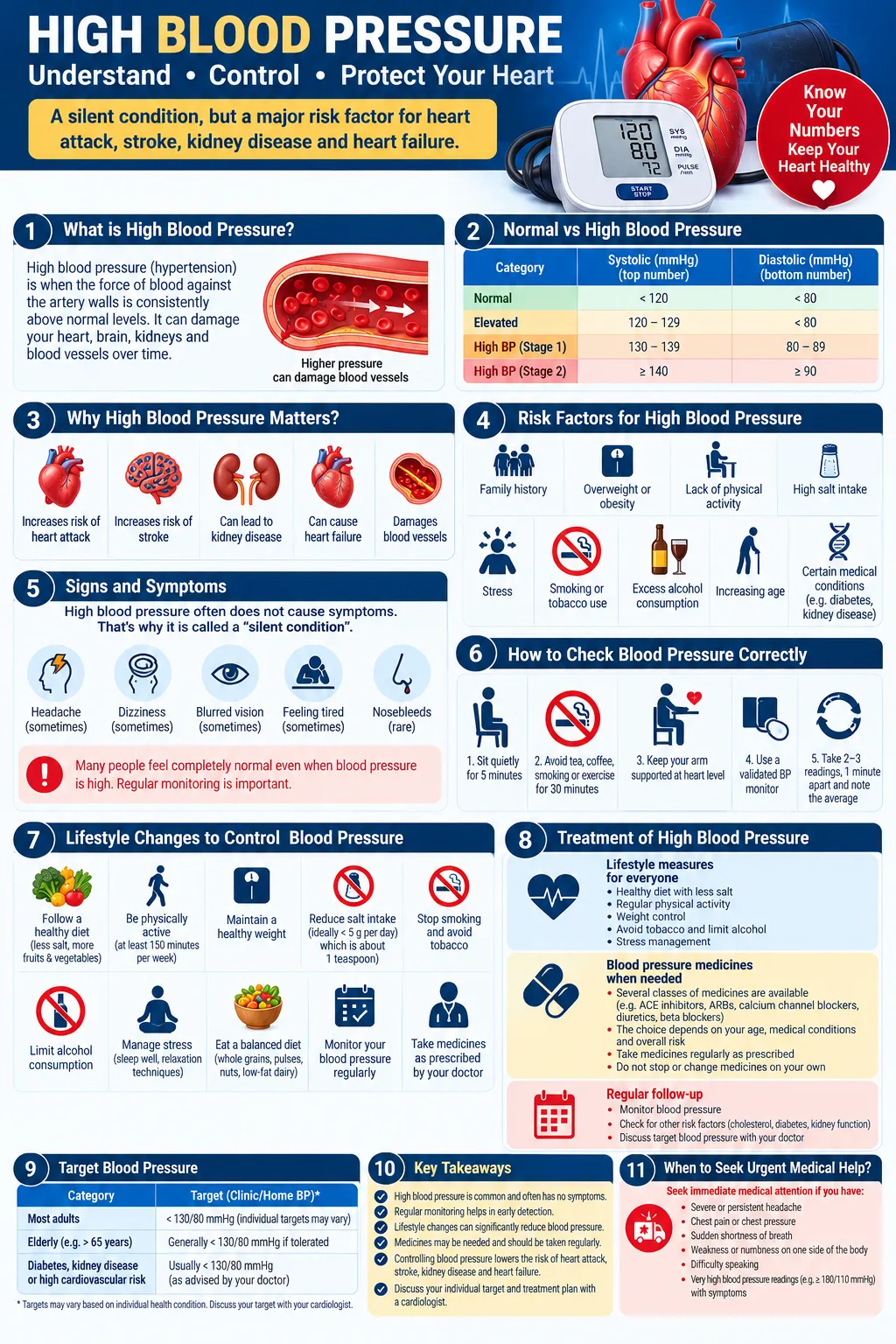
Blood pressure categories differ somewhat between clinical guidelines. The following is a commonly used classification from American guidelines for adults:
| Category | Systolic | Diastolic |
|---|---|---|
| Normal | Below 120 | Below 80 |
| Elevated | 120–129 | Below 80 |
| Stage 1 hypertension | 130–139 | 80–89 |
| Stage 2 hypertension | 140 or higher | 90 or higher |
All readings are in mmHg. These categories are not universal across all guidelines. Diagnosis should be based on properly measured and repeated readings, interpreted by a healthcare professional.
Home blood pressure monitoring can help identify hypertension and assess how well treatment is working.
For more reliable readings:
Avoid smoking, caffeine and exercise for at least 30 minutes before measurement.
Empty your bladder and sit quietly for five minutes.
Sit with your back supported, feet flat on the floor and legs uncrossed.
Use a validated upper-arm monitor with an appropriately sized cuff.
Support your arm at heart level and avoid talking during measurement.
Take two readings about one minute apart and record the results.
Follow your doctor's instructions about how often to measure your blood pressure.
A home blood pressure log can help your doctor make better treatment decisions. Do not change your medication dose based on an isolated reading unless you have been specifically instructed to do so.
Lifestyle changes are an essential part of hypertension management. Many patients benefit from combining several measures rather than relying on a single change.
Excess sodium can raise blood pressure, particularly in people who are salt-sensitive.
Limit added salt, pickles, papad, salty snacks, instant foods and highly processed packaged products. The World Health Organization recommends adults consume less than 2,000 mg of sodium per day, equivalent to less than 5 g of salt from all sources.
Eat more vegetables, fruits, whole grains, pulses, beans, nuts and other fibre-rich foods. Choose appropriate portions and limit foods high in saturated fat, excess sugar and sodium.
A DASH-style eating pattern can help reduce blood pressure. People with kidney disease or other medical conditions may need individual dietary advice.
For most adults, aim for at least 150 minutes of moderate-intensity aerobic activity each week, if medically appropriate.
Brisk walking, cycling and swimming are useful options. Start gradually if you have been inactive and seek medical advice if you experience chest discomfort, unusual breathlessness, dizziness or fainting during exercise.
Excess weight increases the likelihood of developing hypertension. Gradual, sustainable weight loss can help improve blood pressure in people who are overweight.
Focus on balanced meals, suitable portions, regular exercise and consistent sleep rather than crash diets.
Smoking damages blood vessels and increases the risk of heart attack and stroke. Stopping tobacco use is an important part of reducing overall cardiovascular risk, even when blood pressure is already controlled.
Excessive alcohol consumption can raise blood pressure. Reducing alcohol intake, maintaining regular sleep and using healthy stress-management techniques can support cardiovascular health.
Persistent snoring, choking during sleep or excessive daytime sleepiness may indicate sleep apnoea and should be discussed with a doctor.
Lifestyle changes are important, but medication is often necessary to achieve adequate blood pressure control.
Your doctor may recommend treatment based on your blood pressure readings, cardiovascular risk, diabetes status, kidney function and other medical conditions.
Common classes of blood pressure medicines include:
ACE inhibitors or angiotensin receptor blockers (ARBs)
Calcium channel blockers
Thiazide-like diuretics
Other medicines when clinically indicated
Some patients require more than one medicine to achieve their target.
Take prescribed medicines consistently. Do not stop treatment simply because your readings have improved or because you feel well. If you experience side effects or unusually low readings, discuss them with your treating doctor before changing the treatment plan.
A blood pressure target should be individualised. Many adults are treated towards a level below 130/80 mmHg when appropriate and well tolerated, but the target may differ according to age, frailty, kidney disease, other medical conditions and the guideline used.
Your doctor can help determine the most appropriate target and whether home readings or additional monitoring are needed.
Hypertension is a major risk factor for coronary artery disease, heart failure and other cardiovascular complications. It can also coexist with diabetes, high cholesterol and obesity, further increasing overall risk.
People with known coronary artery disease, a previous heart attack or a history of angioplasty need careful long-term management of blood pressure and other risk factors.
Treatment usually includes appropriate medication, lifestyle changes, regular monitoring and follow-up.
If your blood pressure is above 180 mmHg systolic and/or 120 mmHg diastolic, rest briefly and repeat the measurement if you can do so safely.
If the reading remains very high and you have chest pain, breathlessness, severe headache, confusion, visual changes, weakness or difficulty speaking, seek emergency medical care immediately. Do not delay treatment while repeatedly checking your blood pressure.
If the reading remains very high without symptoms, contact a healthcare professional promptly for guidance. Do not take extra medication unless you have been instructed to do so.
People looking for high blood pressure treatment or a cardiologist in Indirapuram, Ghaziabad, can seek an assessment to understand their blood pressure readings and overall cardiovascular risk.
Dr Ankur Gautam, DM (Cardiology), Senior Consultant and Interventional Cardiologist, provides cardiac consultation and guidance on hypertension, cholesterol management, coronary artery disease and cardiovascular risk reduction.
Consultation is available at Medical Mantra Multispeciality Clinic, Indirapuram, Ghaziabad, and at KDSG Super Speciality Hospital, Greater Noida West.
An individual assessment can help determine whether lifestyle changes, medication adjustments or further investigations are appropriate.
Yes. Hypertension is often symptom-free, which is why regular blood pressure measurement is important.
Some people may achieve adequate control through lifestyle changes, depending on their readings and cardiovascular risk. Others need medication to reduce their risk of complications. Do not delay prescribed treatment while trying lifestyle changes alone.
The frequency depends on your readings, medical history and treatment plan. Your doctor may recommend regular home monitoring if you have hypertension or are adjusting medication.
Usually not. Repeated measurements using the correct technique, and sometimes home or ambulatory monitoring, help establish the diagnosis. However, severely elevated readings or concerning symptoms may require urgent assessment.
A qualified doctor or cardiologist can assess hypertension, evaluate cardiovascular risk and recommend appropriate treatment and follow-up.
High blood pressure is common, often silent and potentially serious if left uncontrolled. Regular monitoring, reduced salt intake, a balanced diet, physical activity, weight management and appropriate medication can help protect your heart, brain and kidneys.
Do not ignore persistently high readings simply because you feel well. Early assessment and a personalised treatment plan can make a meaningful difference to long-term health.
Author: Dr Ankur Gautam, MBBS, MD (Medicine), DM (Cardiology)
Senior Consultant & Interventional Cardiologist
Medical Mantra Multispeciality Clinic, Indirapuram, Ghaziabad
KDSG Super Speciality Hospital, Greater Noida West
Medical disclaimer: This article is for general educational purposes and does not replace individual medical consultation, diagnosis or treatment.

Blood tests are commonly used to understand different aspects of a person's health. Doctors may recommend them to investigate symptoms, monitor existi... ( Read More )
High Blood Pressure: Symptoms, Causes, Treatment and PreventionHigh blood pressure, also known as hypertension, is one of the most common cardiovascul... ( Read More )
Cholesterol Management: A Cardiologist’s Guide to Healthy Cholesterol LevelsHigh cholesterol is a common health concern that can increase the risk o... ( Read More )
CT Coronary Angiography vs Invasive Coronary Angiography: Which Test Is Right for You?When evaluating possible coronary artery disease, two commonly d... ( Read More )